How to Use
How to Use
- Shake the concentrate thoroughly before use.
- Add 100ml Goodbye Red Mite Concentrate to 900ml warm water.
- Mix thoroughly to create 1 litre of fresh ready-to-use spray.
- Remove birds before application.
- Spray directly onto perch ends, nest boxes, timber joints, cracks, crevices, roofing felt, hinges and other potential hiding places.
- Pay particular attention to sheltered areas where red mites may spend daylight hours.
- Allow surfaces to dry fully before returning birds.
- Many poultry keepers choose to repeat the application approximately 7 days later as part of their wider red mite management programme.
Why mix fresh? Goodbye Red Mite contains high levels of Azadirachta indica seed oil and aromatic plant compounds that perform best when mixed immediately before use.
Red Mite Top Tip: Roll up a piece of corrugated cardboard and place it near perch ends, nest boxes or other sheltered areas within the coop. Leave it for a few days, then carefully unroll it and inspect inside. Red mites often use the cardboard as a hiding place, making this a simple way to monitor mite activity and identify potential problems early.
Another Top Tip: Red mites rarely spend their day on chickens. Focus treatment on the coop itself, particularly perch ends, nest boxes, roofing felt, timber joints and cracks where mites are most likely to hide.
Do not use Goodbye Red Mite on the birds directly.
For best results, use alongside regular coop cleaning and routine poultry housing inspections.
Ingredients
Ingredients
Azadirachta indica seed oil is one of the most recognised plant-derived ingredients used within poultry keeping and has long been associated with routine red mite management and poultry housing maintenance programmes.
High Azadirachta indica content allows Goodbye Red Mite to be supplied as a concentrate, enabling poultry keepers to prepare fresh spray immediately before use.
Thymol is a naturally occurring phenolic compound derived from thyme and is widely used in poultry housing products associated with red mite management and environmental maintenance.
Aromatic plant compounds help create an environment that many poultry keepers associate with routine red mite prevention and poultry housing management.
Fresh-mix concentrate technology allows active aromatic ingredients to be prepared immediately before application rather than sitting diluted for extended periods.
Concentrated formulation reduces storage space, minimises packaging waste and allows poultry keepers to prepare only what is needed for each treatment.
Customer Reviews
Customer Reviews
Easy to mix and use,its a bit smelly so old clothes and eye and hand protection needed. Removed birds and sprayed house liberally especially in corners.left to dry for 2 days,closed house.so birds not in contact.then left open overnight 2 nights as it is smelly.When girls were housed elsewhere.
Checked to see if safe, when I realised I had mite I was covered just by standing in the doorway.
Stood for 10 minutes all good,no mites.put girls into house that night.
FAQ
FAQ
What are red mites in chickens?
Red mites are one of the most common external parasites affecting chickens and other poultry. They typically hide within the coop during the day before emerging at night to feed on resting birds.
Where do red mites hide in a chicken coop?
Red mites commonly hide inside perch ends, nest boxes, roofing felt, timber joints, hinges, cracks, crevices and other sheltered areas throughout poultry housing.
How do I know if my chickens have red mites?
Common signs include restless birds at night, reluctance to enter the coop, pale combs, excessive preening, irritation, reduced egg production and visible mite activity within the housing.
Why are red mites worse during spring and summer?
Warmer temperatures can significantly accelerate the red mite life cycle, allowing populations to build rapidly throughout spring and summer.
Can red mites affect egg production?
Heavy red mite infestations can place significant stress on birds. Many poultry keepers monitor closely for changes in behaviour, comfort and flock performance.
Why do red mites keep coming back?
Red mites progress through several life stages including eggs, immature stages and adults. Hidden populations can remain within poultry housing if management programmes are incomplete.
Why is a second application often recommended?
Many experienced poultry keepers repeat treatment approximately 7 days after the initial application. This helps target newly emerged mites as part of a wider red mite management programme.
Are red mite eggs affected by treatment?
Red mite populations consist of multiple life stages. This is one reason many poultry keepers incorporate follow-up treatments and regular coop inspections into their management routine.
Is one treatment enough for red mites?
Many poultry keepers take an ongoing management approach involving regular inspections, routine cleaning and repeat applications where appropriate.
How can I check for red mites in my chicken coop?
A simple method used by many poultry keepers is to roll up a piece of corrugated cardboard and place it near perch ends, nest boxes or other sheltered areas. After a few days, carefully unroll the cardboard and inspect inside. Red mites often hide within the folds, making this a useful monitoring technique.
When should I check my coop for red mites?
Regular inspections are particularly important throughout spring and summer when red mite populations can increase rapidly. Many poultry keepers routinely inspect perch ends, nest boxes, roofing felt and other hiding places.
Why is Goodbye Red Mite supplied as a concentrate?
Goodbye Red Mite contains high levels of Azadirachta indica seed oil and aromatic plant compounds that perform best when mixed fresh immediately before use.
How much spray does one bottle make?
Mixing 100ml concentrate with 900ml warm water produces 1 litre of ready-to-use spray.
Can I spray chickens directly?
No. Goodbye Red Mite is designed for poultry housing and environmental application rather than direct application to birds.
Where should I spray Goodbye Red Mite?
Focus on perch ends, nest boxes, timber joints, roofing felt, cracks, crevices, hinges and other areas where red mites are known to hide.
Should I clean the coop before applying Goodbye Red Mite?
Yes. Thorough cleaning helps remove debris, improves access to mite hiding places and forms an important part of overall poultry housing management. Many poultry keepers start with Coop Cleaner Disinfectant Concentrate before applying Goodbye Red Mite.
What's the difference between Coop Cleaner and Goodbye Red Mite?
Coop Cleaner Disinfectant Concentrate is designed for routine poultry housing cleaning and hygiene. Goodbye Red Mite is specifically designed for use in red mite management programmes and is commonly applied to perch ends, nest boxes, cracks and crevices where mites hide.
Can I use Goodbye Red Mite alongside Coop Cleaner Spray?
Yes. Many poultry keepers use Coop Cleaner Spray for routine maintenance between larger cleans and treatments, helping keep poultry housing cleaner and easier to inspect.
What should I do if I find red mites in my coop?
Many poultry keepers begin by thoroughly cleaning the housing using Coop Cleaner Disinfectant Concentrate, paying particular attention to perch ends, nest boxes and cracks where mites commonly hide. Goodbye Red Mite can then be applied as part of a wider poultry housing management programme.
What's the best red mite management routine?
Many poultry keepers start with a deep clean using Coop Cleaner Disinfectant Concentrate, use Coop Cleaner Spray for routine maintenance between cleans, and apply Goodbye Red Mite Concentrate to known mite hiding places throughout the coop.
Can Goodbye Red Mite be used as part of a prevention programme?
Many poultry keepers incorporate routine poultry housing treatments into their ongoing management programme throughout the year, particularly during warmer months.
What makes Goodbye Red Mite different?
Goodbye Red Mite combines high levels of Azadirachta indica seed oil with thymol in a fresh-mix concentrate format, allowing poultry keepers to prepare spray immediately before use whilst supporting routine poultry housing maintenance.
Who is Goodbye Red Mite designed for?
Goodbye Red Mite is designed for chicken keepers, poultry breeders and smallholders looking for a practical concentrate for routine poultry housing maintenance and red mite management.
arlo.®
Goodbye Red Mite Concentrate
Goodbye Red Mite Concentrate
Couldn't load pickup availability
How to Use
How to Use
- Shake the concentrate thoroughly before use.
- Add 100ml Goodbye Red Mite Concentrate to 900ml warm water.
- Mix thoroughly to create 1 litre of fresh ready-to-use spray.
- Remove birds before application.
- Spray directly onto perch ends, nest boxes, timber joints, cracks, crevices, roofing felt, hinges and other potential hiding places.
- Pay particular attention to sheltered areas where red mites may spend daylight hours.
- Allow surfaces to dry fully before returning birds.
- Many poultry keepers choose to repeat the application approximately 7 days later as part of their wider red mite management programme.
Why mix fresh? Goodbye Red Mite contains high levels of Azadirachta indica seed oil and aromatic plant compounds that perform best when mixed immediately before use.
Red Mite Top Tip: Roll up a piece of corrugated cardboard and place it near perch ends, nest boxes or other sheltered areas within the coop. Leave it for a few days, then carefully unroll it and inspect inside. Red mites often use the cardboard as a hiding place, making this a simple way to monitor mite activity and identify potential problems early.
Another Top Tip: Red mites rarely spend their day on chickens. Focus treatment on the coop itself, particularly perch ends, nest boxes, roofing felt, timber joints and cracks where mites are most likely to hide.
Do not use Goodbye Red Mite on the birds directly.
For best results, use alongside regular coop cleaning and routine poultry housing inspections.
Ingredients
Ingredients
Azadirachta indica seed oil is one of the most recognised plant-derived ingredients used within poultry keeping and has long been associated with routine red mite management and poultry housing maintenance programmes.
High Azadirachta indica content allows Goodbye Red Mite to be supplied as a concentrate, enabling poultry keepers to prepare fresh spray immediately before use.
Thymol is a naturally occurring phenolic compound derived from thyme and is widely used in poultry housing products associated with red mite management and environmental maintenance.
Aromatic plant compounds help create an environment that many poultry keepers associate with routine red mite prevention and poultry housing management.
Fresh-mix concentrate technology allows active aromatic ingredients to be prepared immediately before application rather than sitting diluted for extended periods.
Concentrated formulation reduces storage space, minimises packaging waste and allows poultry keepers to prepare only what is needed for each treatment.
Customer Reviews
Customer Reviews
Easy to mix and use,its a bit smelly so old clothes and eye and hand protection needed. Removed birds and sprayed house liberally especially in corners.left to dry for 2 days,closed house.so birds not in contact.then left open overnight 2 nights as it is smelly.When girls were housed elsewhere.
Checked to see if safe, when I realised I had mite I was covered just by standing in the doorway.
Stood for 10 minutes all good,no mites.put girls into house that night.
FAQ
FAQ
What are red mites in chickens?
Red mites are one of the most common external parasites affecting chickens and other poultry. They typically hide within the coop during the day before emerging at night to feed on resting birds.
Where do red mites hide in a chicken coop?
Red mites commonly hide inside perch ends, nest boxes, roofing felt, timber joints, hinges, cracks, crevices and other sheltered areas throughout poultry housing.
How do I know if my chickens have red mites?
Common signs include restless birds at night, reluctance to enter the coop, pale combs, excessive preening, irritation, reduced egg production and visible mite activity within the housing.
Why are red mites worse during spring and summer?
Warmer temperatures can significantly accelerate the red mite life cycle, allowing populations to build rapidly throughout spring and summer.
Can red mites affect egg production?
Heavy red mite infestations can place significant stress on birds. Many poultry keepers monitor closely for changes in behaviour, comfort and flock performance.
Why do red mites keep coming back?
Red mites progress through several life stages including eggs, immature stages and adults. Hidden populations can remain within poultry housing if management programmes are incomplete.
Why is a second application often recommended?
Many experienced poultry keepers repeat treatment approximately 7 days after the initial application. This helps target newly emerged mites as part of a wider red mite management programme.
Are red mite eggs affected by treatment?
Red mite populations consist of multiple life stages. This is one reason many poultry keepers incorporate follow-up treatments and regular coop inspections into their management routine.
Is one treatment enough for red mites?
Many poultry keepers take an ongoing management approach involving regular inspections, routine cleaning and repeat applications where appropriate.
How can I check for red mites in my chicken coop?
A simple method used by many poultry keepers is to roll up a piece of corrugated cardboard and place it near perch ends, nest boxes or other sheltered areas. After a few days, carefully unroll the cardboard and inspect inside. Red mites often hide within the folds, making this a useful monitoring technique.
When should I check my coop for red mites?
Regular inspections are particularly important throughout spring and summer when red mite populations can increase rapidly. Many poultry keepers routinely inspect perch ends, nest boxes, roofing felt and other hiding places.
Why is Goodbye Red Mite supplied as a concentrate?
Goodbye Red Mite contains high levels of Azadirachta indica seed oil and aromatic plant compounds that perform best when mixed fresh immediately before use.
How much spray does one bottle make?
Mixing 100ml concentrate with 900ml warm water produces 1 litre of ready-to-use spray.
Can I spray chickens directly?
No. Goodbye Red Mite is designed for poultry housing and environmental application rather than direct application to birds.
Where should I spray Goodbye Red Mite?
Focus on perch ends, nest boxes, timber joints, roofing felt, cracks, crevices, hinges and other areas where red mites are known to hide.
Should I clean the coop before applying Goodbye Red Mite?
Yes. Thorough cleaning helps remove debris, improves access to mite hiding places and forms an important part of overall poultry housing management. Many poultry keepers start with Coop Cleaner Disinfectant Concentrate before applying Goodbye Red Mite.
What's the difference between Coop Cleaner and Goodbye Red Mite?
Coop Cleaner Disinfectant Concentrate is designed for routine poultry housing cleaning and hygiene. Goodbye Red Mite is specifically designed for use in red mite management programmes and is commonly applied to perch ends, nest boxes, cracks and crevices where mites hide.
Can I use Goodbye Red Mite alongside Coop Cleaner Spray?
Yes. Many poultry keepers use Coop Cleaner Spray for routine maintenance between larger cleans and treatments, helping keep poultry housing cleaner and easier to inspect.
What should I do if I find red mites in my coop?
Many poultry keepers begin by thoroughly cleaning the housing using Coop Cleaner Disinfectant Concentrate, paying particular attention to perch ends, nest boxes and cracks where mites commonly hide. Goodbye Red Mite can then be applied as part of a wider poultry housing management programme.
What's the best red mite management routine?
Many poultry keepers start with a deep clean using Coop Cleaner Disinfectant Concentrate, use Coop Cleaner Spray for routine maintenance between cleans, and apply Goodbye Red Mite Concentrate to known mite hiding places throughout the coop.
Can Goodbye Red Mite be used as part of a prevention programme?
Many poultry keepers incorporate routine poultry housing treatments into their ongoing management programme throughout the year, particularly during warmer months.
What makes Goodbye Red Mite different?
Goodbye Red Mite combines high levels of Azadirachta indica seed oil with thymol in a fresh-mix concentrate format, allowing poultry keepers to prepare spray immediately before use whilst supporting routine poultry housing maintenance.
Who is Goodbye Red Mite designed for?
Goodbye Red Mite is designed for chicken keepers, poultry breeders and smallholders looking for a practical concentrate for routine poultry housing maintenance and red mite management.
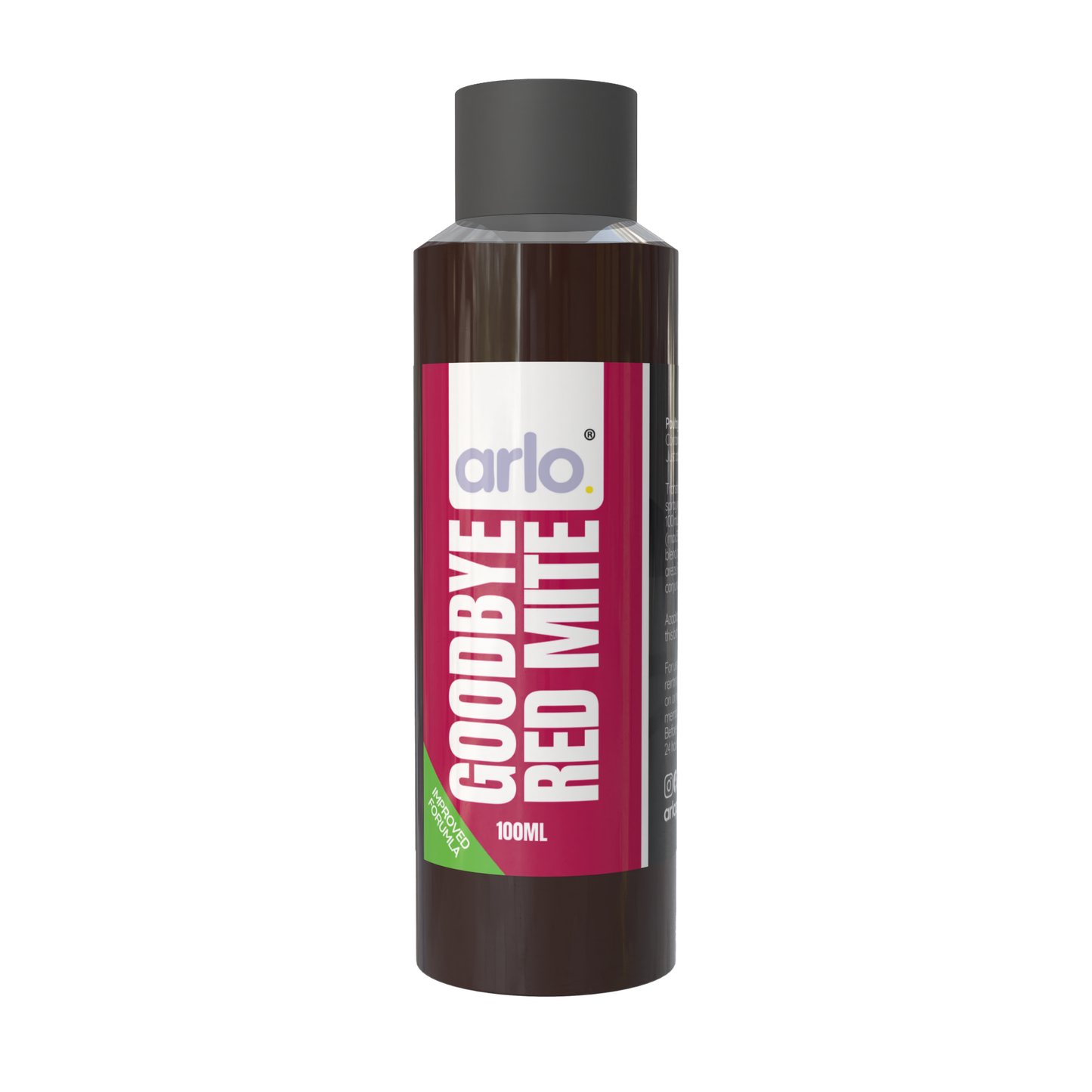
Goodbye Red Mite Concentrate is a concentrated poultry housing treatment developed specifically for chicken coops, hen houses, nest boxes, perches and other poultry accommodation. Diluted at 100ml concentrate to 900ml warm water, each bottle produces 1 litre of fresh ready-to-use spray for routine red mite management and poultry housing maintenance.
Red mites are one of the most common and frustrating challenges faced by chicken keepers. These tiny parasites spend most of their lives hiding within the coop itself before emerging at night to feed on resting birds. Because they spend so much time hidden away, infestations can often become established before they are discovered.
Red mites commonly hide inside perch ends, nest boxes, timber joints, roofing felt, hinges, cracks and crevices throughout poultry housing. Many poultry keepers first become aware of a problem when birds appear restless at night, reluctant to enter the coop, develop pale combs, reduce their egg laying or simply seem uncomfortable during warmer weather.
If you've spent any time researching red mites, you've probably come across every remedy imaginable. Cooking oil on perch ends. Washing up liquid sprays. Homemade mixtures from the kitchen cupboard. Some poultry keepers even swear by hairspray, heat guns and other creative solutions. The trouble is that red mites don't read internet forums.
Goodbye Red Mite Concentrate was developed to offer a more practical approach. Combining high levels of Azadirachta indica seed oil with thymol, the formula can be mixed fresh and applied directly to the cracks, crevices, perch ends and nest boxes where red mites actually spend most of their time.
Unlike ready-to-use products that may sit diluted for months, Goodbye Red Mite is supplied as a concentrate. This allows poultry keepers to prepare fresh spray immediately before use, helping maximise the performance of the aromatic and phenolic plant compounds whilst reducing storage space and unnecessary packaging.
Experienced poultry keepers understand that successful red mite management rarely relies on a single application. Because red mites progress through multiple life stages including eggs, immature stages and adults, many poultry keepers choose to carry out a second application approximately 7 days after the first treatment as part of their wider management programme.
For best results, focus application on perch ends, nest boxes, roofing felt, timber joints, cracks, crevices, hinges and other sheltered areas where red mites are known to hide between feeds. After all, treating the coop is often just as important as treating the problem.
Many poultry keepers also incorporate simple monitoring techniques into their routine. One popular method is rolling up a piece of corrugated cardboard and placing it near perch ends or nesting areas. After a few days, unroll the cardboard and inspect inside. Red mites often use the folds as a hiding place, making it an easy way to monitor activity and identify potential problems early.
Goodbye Red Mite works particularly well as part of a complete poultry housing management programme. Many poultry keepers start with a deep clean using Coop Cleaner Disinfectant Concentrate, maintain housing between cleans using Coop Cleaner Spray, and apply Goodbye Red Mite to known mite hiding places throughout the coop.
Whether you're dealing with a known red mite problem, carrying out routine coop maintenance or preparing for the warmer months when mite activity tends to increase, Goodbye Red Mite provides a practical, fresh-mix solution for modern poultry keepers.
Suitable for chicken coops, hen houses, poultry sheds, breeding pens, nest boxes and other poultry accommodation.
Share