How to Use
How to Use
- Start by removing any excessive mud, bedding or loose debris from the feather. A stiff brush works well for this and helps expose the feather underneath.
- Thoroughly wet the feather using warm water. Take your time. Heavy feather can be surprisingly difficult to fully saturate and water often struggles to reach the skin beneath.
- Apply Mighty Mite directly into the feather, working section by section if necessary. Focus on getting the shampoo down to skin level rather than simply washing the outer feather.
- Massage vigorously to create a rich foam. Work the shampoo deep into the feather, paying particular attention to the heels, pasterns, fetlocks and other areas where grease, dead skin and debris commonly accumulate.
- Continue working the foam through the feather until the entire leg is fully saturated and covered. The rich foam helps lift grease, scurf, dead skin and debris whilst carrying the active ingredients throughout the feather.
- Leave in contact for 5-10 minutes where practical. This allows the shampoo system to penetrate dense feather and soften stubborn build-up.
- Whilst the shampoo is working, gently massage problem areas to help loosen grease, scales, scurf and debris trapped close to the skin.
- Rinse thoroughly using plenty of clean water. Continue rinsing until all shampoo residue has been removed.
- Allow the feather to dry naturally or towel dry where appropriate.
- Once dry, brush through the feather thoroughly. This is an important step. Many owners find that dead skin, loose scurf, grease and debris which have been loosened during washing can now be mechanically removed through brushing and grooming.
- Pay particular attention to the skin beneath the feather during routine inspections. Part the feather regularly and check for irritation, excessive scaling, grease build-up or areas where the horse is repeatedly stamping, scratching or biting.
The Mighty Mite Method: Feather mites thrive in the environment created by dense feather, dead skin, grease and debris. Mighty Mite has been designed around a simple principle: clean the feather, clean the skin and mechanically remove the build-up that mites prefer. The shampoo helps loosen it. Your grooming brush removes it.
Top Cob Owner Tip: Once dry, many owners are surprised by how much loose skin, scurf and debris can be brushed from feathers after washing. Regular grooming is one of the most effective ways to support long-term feather health.
Heavy Feather Tip: Don't rush the wetting stage. Most feather shampoos fail because the product never reaches the skin beneath the feather where attention is needed most.
For Ongoing Feather Care: Many owners alternate Mighty Mite with Tea Tree Shampoo for routine skin and feather hygiene. Horses prone to rubbing, seasonal itching or irritated skin are often paired with Goodbye Itch Oil as part of their wider feather-care routine.
Ingredients
Ingredients
Benzyl Benzoate is one of the most recognised ingredients used by owners managing feather mites in cobs, traditional horses and other heavily feathered breeds. For decades, horse owners have relied on benzyl benzoate-based products because feather mites find environments containing benzyl benzoate considerably less hospitable than untreated skin and feather. It remains one of the cornerstone ingredients associated with feather mite management.
Geraniol is widely used in products associated with mites, biting insects and outdoor animal care. Within Mighty Mite, geraniol helps create a less attractive environment for feather mites whilst supporting ongoing feather management. It is particularly valuable when combined with routine washing and grooming as part of a complete feather-care programme.
Eugenol, naturally derived from clove oil, has long been associated with products used during mite season and periods of skin irritation. Alongside benzyl benzoate and geraniol, it helps make the skin and feather environment far less inviting for feather mites whilst supporting overall feather hygiene.
Advanced Wetting Agents are arguably the most important part of the entire formula. Feather mites live close to the skin beneath dense feather, not on the outer hair. Ordinary shampoos often fail because they never reach the skin. Mighty Mite's wetting system helps carry water, shampoo and active ingredients deep through the feather where they are needed most.
Rich Foam Technology helps surround and lift grease, dead skin, scurf, mud and debris from the feather. This build-up can provide the perfect environment for ongoing feather problems. By removing it, the feather becomes cleaner, healthier and considerably less welcoming to mites.
Deep Feather Cleansing System has been designed specifically for cobs, traditional horses, Shires and other heavily feathered breeds. The goal is not simply to clean the feather. The goal is to reach the skin beneath it, where feather mites live and where effective feather management begins.
Mechanical Removal Philosophy sits at the heart of Mighty Mite. The shampoo helps loosen grease, dead skin, scurf and debris whilst creating an environment mites dislike. Regular brushing and grooming then help physically remove the material mites thrive in. The shampoo changes the environment. The brush removes it.
Customer Reviews
Customer Reviews
FAQ
FAQ
Why is my horse constantly stamping its feet?
Repeated stamping is one of the most commonly reported signs associated with feather mites and feather irritation. Many owners first begin investigating feather mites after noticing unexplained foot stamping, particularly in cobs and heavily feathered horses.
What are feather mites in horses?
Feather mites are microscopic parasites commonly associated with heavily feathered breeds including cobs, traditional horses, Shires and Clydesdales. They are frequently linked to itching, stamping, rubbing and irritation around the lower legs.
Why are feather mites more common in cobs and heavily feathered horses?
Heavy feather creates warmth, shelter and protection around the lower leg. Whilst beneficial for the horse, these same conditions can also create an ideal environment for feather mite activity whilst making routine inspection and cleaning more difficult.
What is the best shampoo for feather mites?
Many owners look for a shampoo capable of penetrating dense feather, thoroughly cleansing the skin beneath and containing ingredients traditionally associated with feather mite management such as benzyl benzoate, geraniol and eugenol.
Why does Mighty Mite contain benzyl benzoate?
Benzyl benzoate remains one of the most recognised ingredients associated with feather mite management. For generations it has been included in products used by owners of cobs and traditional horses because mites find environments containing benzyl benzoate considerably less hospitable than untreated skin and feather.
Why is washing important when managing feather mites?
Heavy feather naturally traps grease, dead skin, mud and environmental debris close to the skin. Regular washing helps remove this build-up and supports a cleaner, less favourable environment for ongoing feather problems.
What is the difference between feather mites and mud fever?
Feather mites and mud fever are separate conditions, although both can affect the lower limbs and may sometimes produce similar signs including irritation, rubbing and discomfort.
How do I check my horse for feather mites?
Part the feather and inspect the skin beneath. Look for irritation, excessive scaling, broken feathers, debris build-up and areas where the horse repeatedly scratches, bites or stamps.
Can feather mites affect horses all year round?
Yes. Whilst some owners notice seasonal changes, feather irritation and mite-related challenges can occur throughout the year, particularly in heavily feathered horses.
What should I use alongside Mighty Mite?
Many owners use Tea Tree Shampoo for routine coat and skin cleansing between mite-focused washes. Horses prone to rubbing, seasonal itching or irritated skin are often paired with Goodbye Itch Oil as part of their wider skin and feather care routine.
arlo.®
Mighty Mite Horse Feather Shampoo
Mighty Mite Horse Feather Shampoo
Couldn't load pickup availability
How to Use
How to Use
- Start by removing any excessive mud, bedding or loose debris from the feather. A stiff brush works well for this and helps expose the feather underneath.
- Thoroughly wet the feather using warm water. Take your time. Heavy feather can be surprisingly difficult to fully saturate and water often struggles to reach the skin beneath.
- Apply Mighty Mite directly into the feather, working section by section if necessary. Focus on getting the shampoo down to skin level rather than simply washing the outer feather.
- Massage vigorously to create a rich foam. Work the shampoo deep into the feather, paying particular attention to the heels, pasterns, fetlocks and other areas where grease, dead skin and debris commonly accumulate.
- Continue working the foam through the feather until the entire leg is fully saturated and covered. The rich foam helps lift grease, scurf, dead skin and debris whilst carrying the active ingredients throughout the feather.
- Leave in contact for 5-10 minutes where practical. This allows the shampoo system to penetrate dense feather and soften stubborn build-up.
- Whilst the shampoo is working, gently massage problem areas to help loosen grease, scales, scurf and debris trapped close to the skin.
- Rinse thoroughly using plenty of clean water. Continue rinsing until all shampoo residue has been removed.
- Allow the feather to dry naturally or towel dry where appropriate.
- Once dry, brush through the feather thoroughly. This is an important step. Many owners find that dead skin, loose scurf, grease and debris which have been loosened during washing can now be mechanically removed through brushing and grooming.
- Pay particular attention to the skin beneath the feather during routine inspections. Part the feather regularly and check for irritation, excessive scaling, grease build-up or areas where the horse is repeatedly stamping, scratching or biting.
The Mighty Mite Method: Feather mites thrive in the environment created by dense feather, dead skin, grease and debris. Mighty Mite has been designed around a simple principle: clean the feather, clean the skin and mechanically remove the build-up that mites prefer. The shampoo helps loosen it. Your grooming brush removes it.
Top Cob Owner Tip: Once dry, many owners are surprised by how much loose skin, scurf and debris can be brushed from feathers after washing. Regular grooming is one of the most effective ways to support long-term feather health.
Heavy Feather Tip: Don't rush the wetting stage. Most feather shampoos fail because the product never reaches the skin beneath the feather where attention is needed most.
For Ongoing Feather Care: Many owners alternate Mighty Mite with Tea Tree Shampoo for routine skin and feather hygiene. Horses prone to rubbing, seasonal itching or irritated skin are often paired with Goodbye Itch Oil as part of their wider feather-care routine.
Ingredients
Ingredients
Benzyl Benzoate is one of the most recognised ingredients used by owners managing feather mites in cobs, traditional horses and other heavily feathered breeds. For decades, horse owners have relied on benzyl benzoate-based products because feather mites find environments containing benzyl benzoate considerably less hospitable than untreated skin and feather. It remains one of the cornerstone ingredients associated with feather mite management.
Geraniol is widely used in products associated with mites, biting insects and outdoor animal care. Within Mighty Mite, geraniol helps create a less attractive environment for feather mites whilst supporting ongoing feather management. It is particularly valuable when combined with routine washing and grooming as part of a complete feather-care programme.
Eugenol, naturally derived from clove oil, has long been associated with products used during mite season and periods of skin irritation. Alongside benzyl benzoate and geraniol, it helps make the skin and feather environment far less inviting for feather mites whilst supporting overall feather hygiene.
Advanced Wetting Agents are arguably the most important part of the entire formula. Feather mites live close to the skin beneath dense feather, not on the outer hair. Ordinary shampoos often fail because they never reach the skin. Mighty Mite's wetting system helps carry water, shampoo and active ingredients deep through the feather where they are needed most.
Rich Foam Technology helps surround and lift grease, dead skin, scurf, mud and debris from the feather. This build-up can provide the perfect environment for ongoing feather problems. By removing it, the feather becomes cleaner, healthier and considerably less welcoming to mites.
Deep Feather Cleansing System has been designed specifically for cobs, traditional horses, Shires and other heavily feathered breeds. The goal is not simply to clean the feather. The goal is to reach the skin beneath it, where feather mites live and where effective feather management begins.
Mechanical Removal Philosophy sits at the heart of Mighty Mite. The shampoo helps loosen grease, dead skin, scurf and debris whilst creating an environment mites dislike. Regular brushing and grooming then help physically remove the material mites thrive in. The shampoo changes the environment. The brush removes it.
Customer Reviews
Customer Reviews
FAQ
FAQ
Why is my horse constantly stamping its feet?
Repeated stamping is one of the most commonly reported signs associated with feather mites and feather irritation. Many owners first begin investigating feather mites after noticing unexplained foot stamping, particularly in cobs and heavily feathered horses.
What are feather mites in horses?
Feather mites are microscopic parasites commonly associated with heavily feathered breeds including cobs, traditional horses, Shires and Clydesdales. They are frequently linked to itching, stamping, rubbing and irritation around the lower legs.
Why are feather mites more common in cobs and heavily feathered horses?
Heavy feather creates warmth, shelter and protection around the lower leg. Whilst beneficial for the horse, these same conditions can also create an ideal environment for feather mite activity whilst making routine inspection and cleaning more difficult.
What is the best shampoo for feather mites?
Many owners look for a shampoo capable of penetrating dense feather, thoroughly cleansing the skin beneath and containing ingredients traditionally associated with feather mite management such as benzyl benzoate, geraniol and eugenol.
Why does Mighty Mite contain benzyl benzoate?
Benzyl benzoate remains one of the most recognised ingredients associated with feather mite management. For generations it has been included in products used by owners of cobs and traditional horses because mites find environments containing benzyl benzoate considerably less hospitable than untreated skin and feather.
Why is washing important when managing feather mites?
Heavy feather naturally traps grease, dead skin, mud and environmental debris close to the skin. Regular washing helps remove this build-up and supports a cleaner, less favourable environment for ongoing feather problems.
What is the difference between feather mites and mud fever?
Feather mites and mud fever are separate conditions, although both can affect the lower limbs and may sometimes produce similar signs including irritation, rubbing and discomfort.
How do I check my horse for feather mites?
Part the feather and inspect the skin beneath. Look for irritation, excessive scaling, broken feathers, debris build-up and areas where the horse repeatedly scratches, bites or stamps.
Can feather mites affect horses all year round?
Yes. Whilst some owners notice seasonal changes, feather irritation and mite-related challenges can occur throughout the year, particularly in heavily feathered horses.
What should I use alongside Mighty Mite?
Many owners use Tea Tree Shampoo for routine coat and skin cleansing between mite-focused washes. Horses prone to rubbing, seasonal itching or irritated skin are often paired with Goodbye Itch Oil as part of their wider skin and feather care routine.
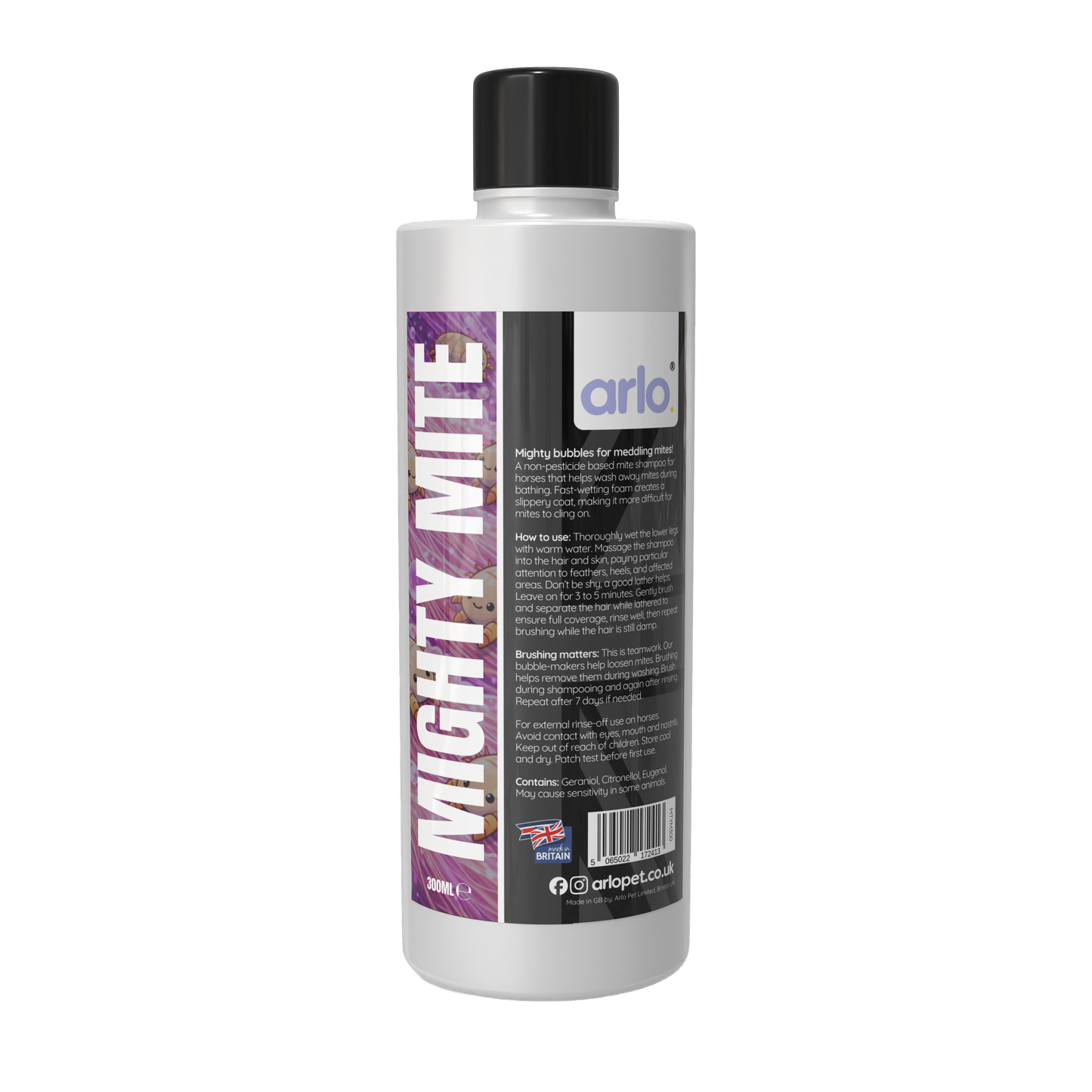
Mighty Mite Horse Feather Shampoo was created because owners of cobs, traditional horses, Shires and other heavily feathered breeds face a problem that ordinary horse shampoos were never designed to solve.
Feather mites don't live on the outside of the feather where most shampoos do their work. They live deep within the feather close to the skin. That's why many owners find themselves trapped in a cycle of washing, stamping, scratching, rubbing and frustration without ever really getting on top of the problem.
If you've ever owned a heavily feathered horse, you'll probably recognise the signs. Constant stamping. Biting at the legs. Rubbing on stable doors. Broken feathers. Thick greasy build-up within the feather. Horses that simply cannot seem to leave their legs alone.
That's exactly why we developed Mighty Mite.
Rather than creating another general-purpose horse shampoo, we built a shampoo specifically for feathered horses and the challenges associated with feather mites, itchy feathers and irritated skin beneath heavy feather.
The formula combines benzyl benzoate, geraniol and eugenol, three ingredients widely recognised by owners managing feather mites and heavily feathered horses.
Benzyl benzoate has been associated with feather mite management for generations and remains one of the most recognised ingredients used by cob owners today. It has earned its reputation because mites find environments containing benzyl benzoate considerably less welcoming than untreated skin and feather.
Geraniol and eugenol have long been used in products associated with mites, biting insects and seasonal skin irritation. Together they help create an environment that mites find far less attractive whilst supporting routine feather hygiene and skin care.
But ingredients alone don't solve feather mite problems.
The biggest challenge is getting those ingredients through the feather and onto the skin.
Heavy feather naturally traps mud, grease, dead skin, moisture and environmental debris close to the skin. Over time this build-up can become substantial. Many owners are surprised by how much grease, scurf and debris is hidden beneath apparently healthy feather.
Mighty Mite uses advanced wetting technology specifically chosen to carry water and shampoo deep through dense feather. This helps the formula reach the skin more effectively rather than simply washing the outer hair.
The rich foam system helps lift grease, dead skin, mud, scurf and feather debris whilst carrying the active ingredients throughout the feather. Cleaner feather means cleaner skin. Cleaner skin means a less favourable environment for ongoing feather problems.
This is why many owners find routine feather washing becomes one of the most important parts of long-term feather management.
Mighty Mite was built around a simple idea:
Cleaner feathers. Cleaner skin. Less grease. Less debris. A less welcoming environment for feather mites.
For routine coat and skin maintenance between mite-focused washes, many owners also keep Tea Tree Shampoo on hand as their everyday grooming shampoo.
For horses prone to rubbing, seasonal itching or irritated skin around the feathers, many owners pair Mighty Mite with Goodbye Itch Oil as part of their wider feather and skin care routine.
Whether you're dealing with feather mites, itchy horse legs, stamping horses, broken feathers or simply trying to keep heavy feather clean and healthy, Mighty Mite was designed specifically for the challenges that feathered horses present.
Share