How to Use
How to Use
- Pick out the hoof thoroughly and remove all mud, bedding, stones and debris.
- Ensure the hoof is as clean and dry as possible before application.
- Apply Farrier Hoof Oil to the hoof wall using a hoof brush.
- Work around the entire hoof, paying particular attention to dry, brittle or cracked areas.
- Apply to the sole and frog as part of a complete hoof care routine.
- Allow the oil to absorb before turnout or exercise.
- Use regularly to help maintain hoof condition, moisture balance and appearance.
Top Tip: Many horse owners only apply hoof oil to the outer hoof wall. For complete hoof care, don't forget the sole and frog, which are exposed daily to mud, moisture, bedding and environmental contamination.
For a complete hoof care programme, pair with Sole Shield for sole and frog support and Stinky Hoof for routine hoof hygiene.
Suitable for year-round use, particularly during wet winter conditions, dry summer weather and periods of increased hoof growth.
Ingredients
Ingredients
Stockholm Tar has been used in hoof care for generations and remains one of the most respected ingredients in traditional farrier products. Naturally rich in protective compounds, it is particularly valued for its antibacterial properties and its traditional role in hoof wall, sole and frog care.
Natural conditioning oils help support hoof moisture balance while contributing to healthy-looking hooves.
Fatty acid-rich oils help maintain hoof suppleness, flexibility and resilience while supporting routine hoof maintenance throughout the year.
Hoof-conditioning ingredients help support the appearance and condition of the hoof wall, sole and frog.
Traditional oil-based formula provides excellent coverage while leaving a smart, professional finish suitable for everyday use and show preparation.
Customer Reviews
Customer Reviews
First time purchaser - very easy to use, handy closeable nozzle. Smells lovely and goes on easily, no mess 👍🏼
Very good
FAQ
FAQ
Why do horses need hoof oil?
Horse hooves are constantly exposed to changing weather conditions, mud, bedding, hard ground, moisture and daily wear. Regular hoof care helps support hoof condition, moisture balance and overall hoof health throughout the year.
What does hoof oil actually do?
Hoof oil helps condition the hoof wall, support moisture balance and maintain healthy-looking hooves. Regular application can form an important part of a complete hoof care routine.
Can hoof oil help dry hooves?
Many horse owners use hoof oil during dry weather when hooves may become excessively dry, brittle or prone to cracking. Conditioning oils help support moisture balance and hoof suppleness.
Can hoof oil help brittle hooves?
Brittle hooves are a common concern during dry weather and periods of rapid moisture loss. Regular conditioning forms an important part of many hoof care programmes.
What causes hoof wall cracks?
Hoof wall cracks can develop for a variety of reasons including environmental conditions, moisture fluctuations, hoof quality, management practices and general wear. Many owners use hoof oil as part of a routine hoof maintenance programme.
Should hoof oil be used in winter?
Absolutely. Winter conditions expose hooves to mud, standing water, wet bedding and prolonged moisture. Regular hoof care remains important throughout the wetter months.
Should hoof oil be used in summer?
Yes. Dry ground, hot weather and dusty conditions can all contribute to excessive moisture loss from the hoof. Many owners increase hoof conditioning during summer months.
What is Stockholm Tar?
Stockholm Tar is a traditional wood tar that has been used in horse hoof care for generations. It remains one of the most respected ingredients in farrier-style hoof dressings.
Why is Stockholm Tar used in hoof care?
Stockholm Tar is particularly valued for its naturally protective and antibacterial properties and has long been used by horse owners and farriers as part of routine hoof maintenance.
Can Farrier Hoof Oil be applied to the frog?
Yes. The frog is often overlooked despite being exposed to mud, moisture and daily contamination. Farrier Hoof Oil can be applied to the frog as part of a complete hoof care routine.
Can Farrier Hoof Oil be applied to the sole?
Yes. The sole experiences significant daily wear and can benefit from routine hoof care alongside the hoof wall and frog.
What is the frog of a horse's hoof?
The frog is the V-shaped structure on the underside of the hoof. It plays an important role in hoof function and is commonly included in routine hoof maintenance.
What causes smelly hooves?
Persistent exposure to mud, moisture, manure and environmental contamination can all contribute to unpleasant hoof odours. Maintaining good hoof hygiene forms an important part of routine hoof care.
What is thrush?
Thrush is one of the most common hoof hygiene challenges affecting horses and is typically associated with the frog area of the hoof. Good hoof hygiene and regular hoof maintenance are important parts of managing hoof health.
Can I use Farrier Hoof Oil alongside Stinky Hoof?
Yes. Many horse owners use Stinky Hoof as part of their hoof hygiene routine before applying Farrier Hoof Oil to support hoof condition and moisture balance.
Can I use Farrier Hoof Oil alongside Sole Shield?
Absolutely. Many owners use Sole Shield for sole and frog support while using Farrier Hoof Oil for hoof wall conditioning and overall hoof maintenance.
What is the difference between Farrier Hoof Oil, Sole Shield and Stinky Hoof?
Farrier Hoof Oil focuses on hoof wall conditioning and moisture balance. Sole Shield is designed for sole and frog support, while Stinky Hoof focuses on routine hoof hygiene and cleanliness.
How often should hoof oil be applied?
Application frequency varies depending on the horse, environment and season. Many owners apply hoof oil several times per week as part of their regular grooming and hoof care routine.
Can Farrier Hoof Oil be used before shows and competitions?
Yes. Farrier Hoof Oil leaves a smart, traditional finish and is often used before competitions, clinics, photoshoots and shows.
Who is Farrier Hoof Oil designed for?
Farrier Hoof Oil is designed for horse owners looking for a traditional Stockholm Tar hoof dressing that supports hoof wall conditioning, sole and frog care, moisture balance and year-round hoof maintenance.
arlo.®
Farrier Horse Hoof Oil
Farrier Horse Hoof Oil
Couldn't load pickup availability
How to Use
How to Use
- Pick out the hoof thoroughly and remove all mud, bedding, stones and debris.
- Ensure the hoof is as clean and dry as possible before application.
- Apply Farrier Hoof Oil to the hoof wall using a hoof brush.
- Work around the entire hoof, paying particular attention to dry, brittle or cracked areas.
- Apply to the sole and frog as part of a complete hoof care routine.
- Allow the oil to absorb before turnout or exercise.
- Use regularly to help maintain hoof condition, moisture balance and appearance.
Top Tip: Many horse owners only apply hoof oil to the outer hoof wall. For complete hoof care, don't forget the sole and frog, which are exposed daily to mud, moisture, bedding and environmental contamination.
For a complete hoof care programme, pair with Sole Shield for sole and frog support and Stinky Hoof for routine hoof hygiene.
Suitable for year-round use, particularly during wet winter conditions, dry summer weather and periods of increased hoof growth.
Ingredients
Ingredients
Stockholm Tar has been used in hoof care for generations and remains one of the most respected ingredients in traditional farrier products. Naturally rich in protective compounds, it is particularly valued for its antibacterial properties and its traditional role in hoof wall, sole and frog care.
Natural conditioning oils help support hoof moisture balance while contributing to healthy-looking hooves.
Fatty acid-rich oils help maintain hoof suppleness, flexibility and resilience while supporting routine hoof maintenance throughout the year.
Hoof-conditioning ingredients help support the appearance and condition of the hoof wall, sole and frog.
Traditional oil-based formula provides excellent coverage while leaving a smart, professional finish suitable for everyday use and show preparation.
Customer Reviews
Customer Reviews
First time purchaser - very easy to use, handy closeable nozzle. Smells lovely and goes on easily, no mess 👍🏼
Very good
FAQ
FAQ
Why do horses need hoof oil?
Horse hooves are constantly exposed to changing weather conditions, mud, bedding, hard ground, moisture and daily wear. Regular hoof care helps support hoof condition, moisture balance and overall hoof health throughout the year.
What does hoof oil actually do?
Hoof oil helps condition the hoof wall, support moisture balance and maintain healthy-looking hooves. Regular application can form an important part of a complete hoof care routine.
Can hoof oil help dry hooves?
Many horse owners use hoof oil during dry weather when hooves may become excessively dry, brittle or prone to cracking. Conditioning oils help support moisture balance and hoof suppleness.
Can hoof oil help brittle hooves?
Brittle hooves are a common concern during dry weather and periods of rapid moisture loss. Regular conditioning forms an important part of many hoof care programmes.
What causes hoof wall cracks?
Hoof wall cracks can develop for a variety of reasons including environmental conditions, moisture fluctuations, hoof quality, management practices and general wear. Many owners use hoof oil as part of a routine hoof maintenance programme.
Should hoof oil be used in winter?
Absolutely. Winter conditions expose hooves to mud, standing water, wet bedding and prolonged moisture. Regular hoof care remains important throughout the wetter months.
Should hoof oil be used in summer?
Yes. Dry ground, hot weather and dusty conditions can all contribute to excessive moisture loss from the hoof. Many owners increase hoof conditioning during summer months.
What is Stockholm Tar?
Stockholm Tar is a traditional wood tar that has been used in horse hoof care for generations. It remains one of the most respected ingredients in farrier-style hoof dressings.
Why is Stockholm Tar used in hoof care?
Stockholm Tar is particularly valued for its naturally protective and antibacterial properties and has long been used by horse owners and farriers as part of routine hoof maintenance.
Can Farrier Hoof Oil be applied to the frog?
Yes. The frog is often overlooked despite being exposed to mud, moisture and daily contamination. Farrier Hoof Oil can be applied to the frog as part of a complete hoof care routine.
Can Farrier Hoof Oil be applied to the sole?
Yes. The sole experiences significant daily wear and can benefit from routine hoof care alongside the hoof wall and frog.
What is the frog of a horse's hoof?
The frog is the V-shaped structure on the underside of the hoof. It plays an important role in hoof function and is commonly included in routine hoof maintenance.
What causes smelly hooves?
Persistent exposure to mud, moisture, manure and environmental contamination can all contribute to unpleasant hoof odours. Maintaining good hoof hygiene forms an important part of routine hoof care.
What is thrush?
Thrush is one of the most common hoof hygiene challenges affecting horses and is typically associated with the frog area of the hoof. Good hoof hygiene and regular hoof maintenance are important parts of managing hoof health.
Can I use Farrier Hoof Oil alongside Stinky Hoof?
Yes. Many horse owners use Stinky Hoof as part of their hoof hygiene routine before applying Farrier Hoof Oil to support hoof condition and moisture balance.
Can I use Farrier Hoof Oil alongside Sole Shield?
Absolutely. Many owners use Sole Shield for sole and frog support while using Farrier Hoof Oil for hoof wall conditioning and overall hoof maintenance.
What is the difference between Farrier Hoof Oil, Sole Shield and Stinky Hoof?
Farrier Hoof Oil focuses on hoof wall conditioning and moisture balance. Sole Shield is designed for sole and frog support, while Stinky Hoof focuses on routine hoof hygiene and cleanliness.
How often should hoof oil be applied?
Application frequency varies depending on the horse, environment and season. Many owners apply hoof oil several times per week as part of their regular grooming and hoof care routine.
Can Farrier Hoof Oil be used before shows and competitions?
Yes. Farrier Hoof Oil leaves a smart, traditional finish and is often used before competitions, clinics, photoshoots and shows.
Who is Farrier Hoof Oil designed for?
Farrier Hoof Oil is designed for horse owners looking for a traditional Stockholm Tar hoof dressing that supports hoof wall conditioning, sole and frog care, moisture balance and year-round hoof maintenance.
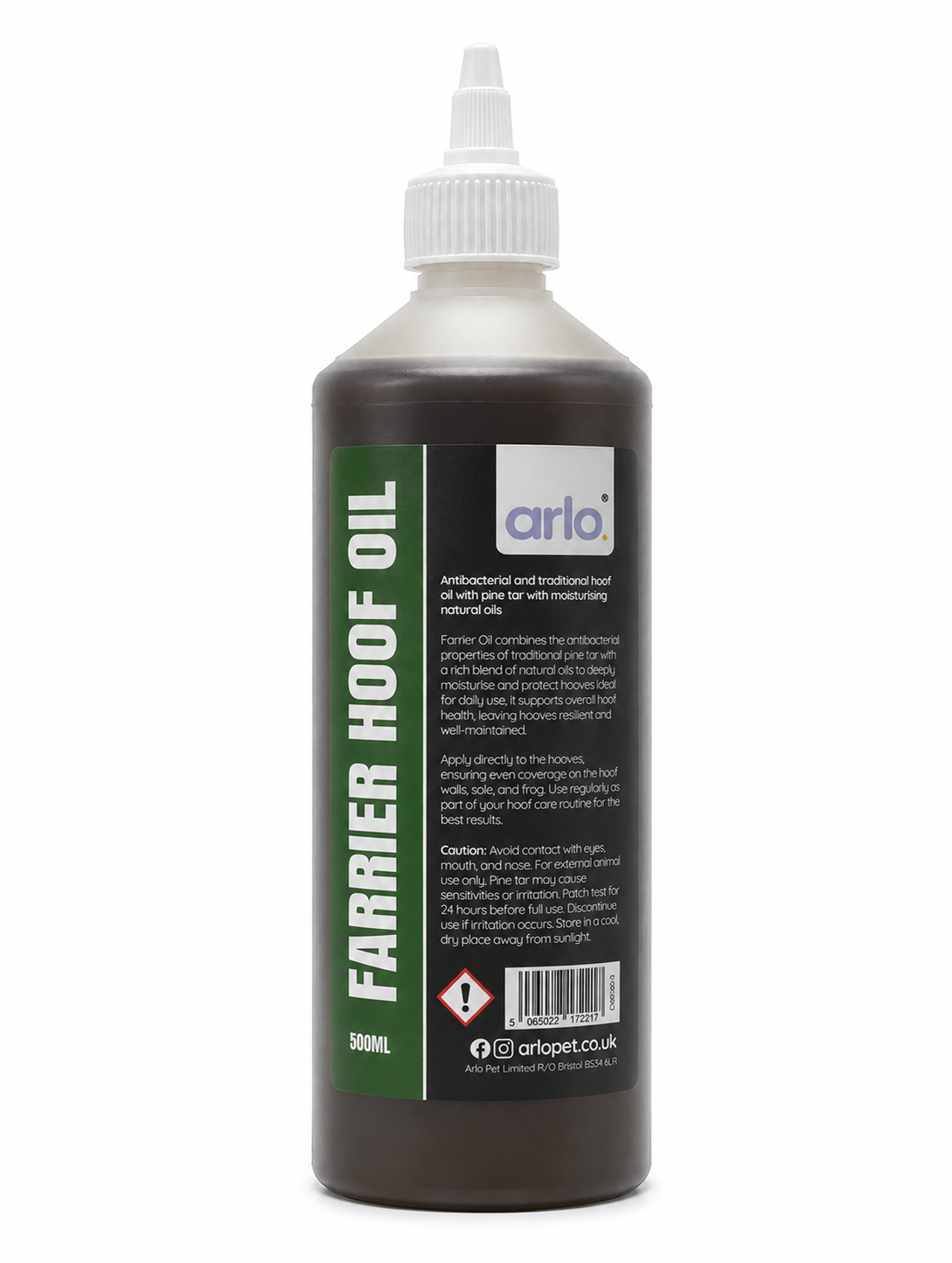
Farrier Hoof Oil is a traditional horse hoof oil and hoof dressing combining Stockholm Tar with natural conditioning oils rich in beneficial fatty acids. Developed for routine hoof care, it helps support hoof condition, maintain moisture balance and promote healthy-looking hooves throughout the year.
Healthy hooves are essential to every horse. Constant exposure to mud, wet fields, bedding, hard ground, dry weather and repeated washing can all influence hoof condition over time. Maintaining the correct balance between moisture, conditioning and routine hoof hygiene forms an important part of modern hoof care.
At the heart of Farrier Hoof Oil is traditional Stockholm Tar, one of the most respected ingredients in hoof care. Used by farriers and horse owners for generations, Stockholm Tar is valued for its naturally protective and antibacterial properties, making it particularly popular for routine hoof maintenance and care of the sole and frog.
Unlike many hoof oils that focus solely on cosmetic shine, Farrier Hoof Oil has been developed to support the entire hoof. The natural oils help condition the hoof wall while delivering fatty acids that support hoof suppleness and help maintain a healthy moisture balance.
Many horse owners apply hoof oil only to the hoof wall, overlooking the sole and frog entirely. Farrier Hoof Oil can be applied to the hoof wall, sole and frog, helping provide complete hoof care rather than simply improving appearance.
The easy-squeeze bottle allows clean, controlled application with less waste than traditional tins and brushes, making it ideal for daily use around the yard, stable or horsebox.
For a complete hoof care programme, pair with Sole Shield for sole and frog support and Stinky Hoof for routine hoof hygiene. Together they provide a complete approach to hoof wall conditioning, sole and frog maintenance, and everyday hoof care.
Whether you're managing dry hooves, brittle hooves, hoof wall cracks, wet winter conditions or simply maintaining healthy feet year-round, Farrier Hoof Oil provides a traditional solution trusted by generations of horse owners and farriers.
Share